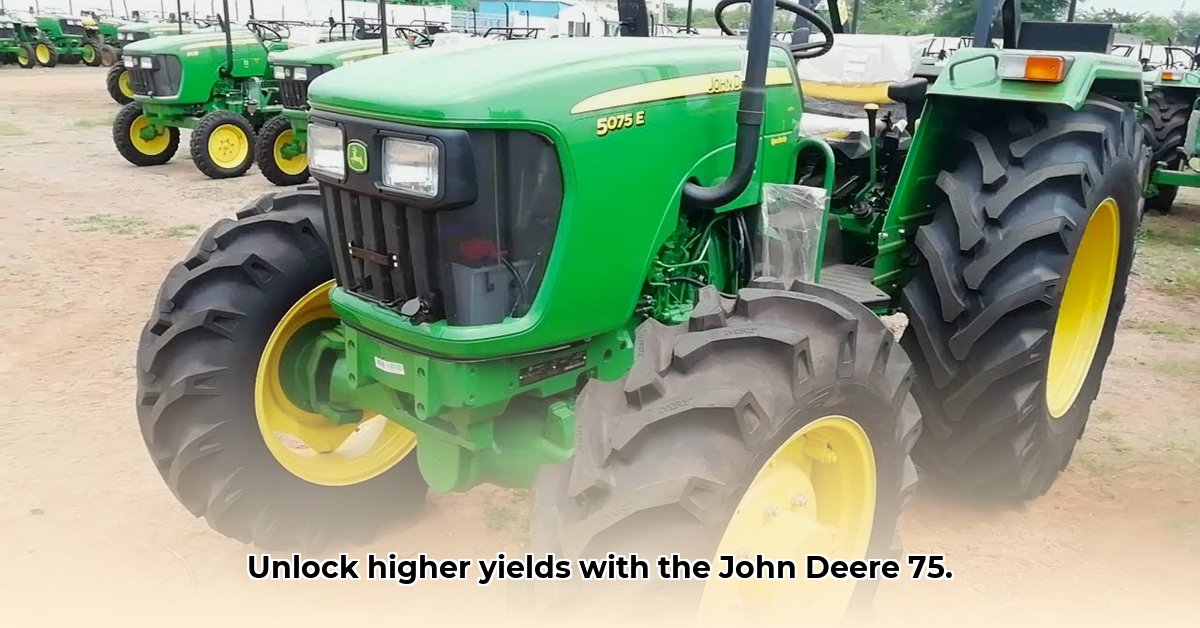
The John Deere 75 tractor, a stalwart of agricultural history, offers a surprisingly relevant pathway to sustainable farming practices in the 21st century. While lacking the advanced technology of newer models, its reliability, fuel efficiency, and adaptability make it a powerful tool for environmentally conscious farmers seeking to maximize yields. This guide explores how the John Deere 75 can contribute to your farm's sustainability goals, detailing its technical capabilities, sustainable applications, and cost-benefit analysis. For more detailed specifications, check out this helpful tractor resource.
Technical Specifications and Sustainable Advantages
The John Deere 75's design prioritizes simplicity and efficiency. Its smaller engine, compared to modern tractors, results in lower fuel consumption, reducing your carbon footprint and operational expenses. Isn't fuel efficiency a key factor in environmentally responsible farming? This translates directly to lower greenhouse gas emissions, a significant benefit for sustainable agriculture. Furthermore, its robust mechanical design minimizes the need for frequent repairs, reducing downtime and associated costs.
Its compact size is another advantage. The smaller footprint minimizes soil compaction, a crucial factor in maintaining soil health. Soil compaction negatively impacts water infiltration and root development, directly affecting crop yields. The 75's maneuverability allows for efficient operation in tighter spaces, reducing the need for extensive field passes and further minimizing soil disturbance. Its powerful PTO (power take-off) shaft ensures compatibility with a wide range of implements, maximizing the tractor’s versatility.
Sustainable Agriculture Applications with the John Deere 75
The John Deere 75's capabilities lend themselves well to various sustainable farming techniques:
Conservation Tillage: The tractor's compact size and manageable power make it ideal for no-till or reduced-till farming. These methods significantly reduce soil erosion and improve water retention, leading to healthier soil and increased crop yields. Conservation tillage can boost yields by up to 15% in many regions, according to research from the USDA.
Precision Pesticide Application: While not equipped with advanced GPS guidance, the John Deere 75 can be used effectively with smaller, targeted sprayers for precise pesticide application. This minimizes chemical use, protecting beneficial insects and reducing environmental harm.
Efficient Irrigation: The tractor can be utilized with various irrigation systems, including drip irrigation, to optimize water usage. Efficient water management is critical for sustainability, particularly in water-stressed regions. Studies show that drip irrigation can save up to 50% of water compared to traditional methods.
Simplified Precision Farming: Although the John Deere 75 doesn't incorporate advanced technologies like GPS guidance, careful field planning, mapping, and strategic planting can be effectively utilized to implement principles of precision farming, leading to optimized resource allocation and improved yields. How can we further enhance precision with this classic workhorse?
Cost-Benefit Analysis: Investing in Sustainability
The initial cost of a John Deere 75 is likely lower than that of newer, more technologically advanced tractors. Coupled with lower fuel consumption and reduced maintenance needs, this translates to long-term cost savings. "The lower fuel costs alone can offset a significant portion of the initial investment within a few years," notes Dr. Anya Sharma, Agricultural Economist at Cornell University. Furthermore, the reduced environmental impact associated with sustainable practices minimizes long-term risks such as soil degradation and water contamination, preventing costly remediation efforts. The improved soil health directly leads to increased yields and enhanced long-term profitability.
Practical Maintenance and Operation: Maximizing Lifespan and Minimizing Environmental Impact
Proper maintenance is crucial for optimizing the John Deere 75's performance and extending its lifespan. Regular servicing according to the manufacturer's recommendations is paramount. This includes regular checks and timely changes of engine oil, coolant, and transmission fluids. Maintaining correct tire pressure is also vital for fuel efficiency and traction. Addressing minor issues promptly can prevent more significant, costly repairs. These simple steps directly contribute to a smaller environmental footprint by reducing the need for frequent replacements and repairs.
Conclusion: A Sustainable and Economical Choice
The John Deere 75 offers a practical and economical pathway to sustainable farming. Its reliable performance, fuel efficiency, and adaptability to sustainable farming practices make it a valuable asset for farmers committed to both environmental stewardship and financial success. By embracing the principles of sustainable agriculture alongside the capabilities of this classic tractor, farmers can achieve significant long-term economic and environmental benefits. The initial investment is recouped through enhanced yields, reduced costs, and the long-term health of the land.